The term „account“ is used often in this tutorial so let’s understand what it is before we proceed. In accounting, an account is a descriptive storage unit used to collect and store information of similar nature. Unpaid balances can lead to more charges over time, including late fees and increased interest rates.
- Starting at the top of the statement we know that the owner’s equity before the start of 2024 was $60,000 and in 2024 the owner invested an additional $10,000.
- It could be anything, from repaying its investors to paying a courier delivery partner just a modest sum.
- It can appear like spending and liabilities are the same thing, but they’re not.
- A technology company spends $10 million annually on research and development (R&D).
- These can be loans, bills, or future payments for goods and services.
- It’s a liability even if an employee hasn’t taken any time off during the pay period.
Liabilities as Legal or Regulatory Obligations
Current liabilities are expected to be paid back within one year, and long-term liabilities are expected to be paid back in over one year. It’s important for companies to keep track of all liabilities, even the short-term ones, so they can accurately determine how to pay them back. On a balance sheet, these two categories are listed separately but added together under “total liabilities” at the Cash Flow Management for Small Businesses bottom. Accounts Payable – Many companies purchase inventory on credit from vendors or supplies. When the supplier delivers the inventory, the company usually has 30 days to pay for it.
Comparing Current and Non-Current Liabilities

Expenses are costs the company incurs in the course of doing business. are liabilities an expense In this guide, we’ll define both liabilities and expenses and outline the key differences between these two financial terms. Did it create an obligation, meaning a future cost that the company will owe? Is the transaction a cost you incurred to generate future revenue?
- The higher it is, the more leveraged it is, and the more liability risk it has.
- While these two concepts are fundamentally distinct, a single transaction often involves both an expense recognition and the simultaneous creation of an obligation.
- For example contingent liabilities can become current or long-term if realized.
- A liability is money owed in the future, while an expense is a cost incurred to help the business run smoothly and generate revenue.
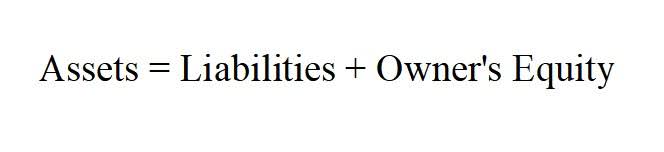
- Everything a company owns (its assets) is funded either by money it owes to others (liabilities) or by the owner’s investment (equity).
- Every business has to record both using the accrual method of accounting.
Examples of Liabilities
Liabilities are recorded as a debit to an asset or expense account, depending on the nature of the transaction, and bookkeeping a credit to the applicable liability account. When the liability gets eventually settled, the liability account will be debited and the cash account credited from which the payment took place. One of the primary goals of a company is to maximize profits which is achievable by boosting revenues while keeping expenses in check. Therefore, slashing costs can help companies to make even more money from sales.

Can a liability also be an expense?
- List all your debts, their amounts, due dates, and interest rates.
- In a sense, a liability is a creditor’s claim on a company’ assets.
- For example, wages payable are considered a liability as it represents the amount owed to employees for their work but not yet paid.
- You can also interpret the accounting equation to say that the company has assets of $16,900 and the lenders have a claim of $7,000 and the owner has a residual claim for the remainder.
- Therefore, there is no transaction involving the income statement for the two-day period of December 1 through December 2.
- Financial statements, such as the balance sheet, represent a snapshot of a company’s assets, liabilities, and equity at a specific point in time.
He has been the CFO or controller of both small and medium sized companies and has run small businesses of his own. He has been a manager and an auditor with Deloitte, a big 4 accountancy firm, and holds a degree from Loughborough University. Do not try to read anything more into the terms other than debit means on the left hand side and credit means on the right hand side of the accounting equation. When the company remits the payroll liabilities to the appropriate government authorities or other entities, it clears the liability from its books. In accounting, a standard chart of accounts is a numbered list of the accounts that comprise a company’s general ledger.
► Income or Revenue

Expenses can become liabilities on a balance sheet when you accrue them, which means you’ve incurred the expense and received the benefit from it, but you haven’t paid for it yet. Conversely, Deferred Revenue, also known as Unearned Revenue, is created when a company receives cash before the service or product is delivered. Receiving a cash advance for a service not yet performed creates a liability, not revenue. This liability represents the firm’s obligation to the customer to deliver the promised goods or services. This is a contra owner’s equity account, because it has a debit balance if draws were made. Even though it is a balance sheet account, it is a temporary account.
Everything You Need To Master Financial Modeling

Properly managing expenses can also lead to higher profitability. As showcased in the above example, liabilities and expenses are closely related. It’s common for expenses to also start off as a liability, in the case that the company has not yet made a cash outflow for the transaction. They may also be referred to as debts, representing what a company owes at any given time to lenders, tax agencies, suppliers, employees, and others. Liabilities represent a business’s obligations, meaning they must be repaid at a future date.